

Stone, Wind, and the Edge of the World
Collected and Recorded by Lucien Harow, Fellow of the Royal Society of Antiquities
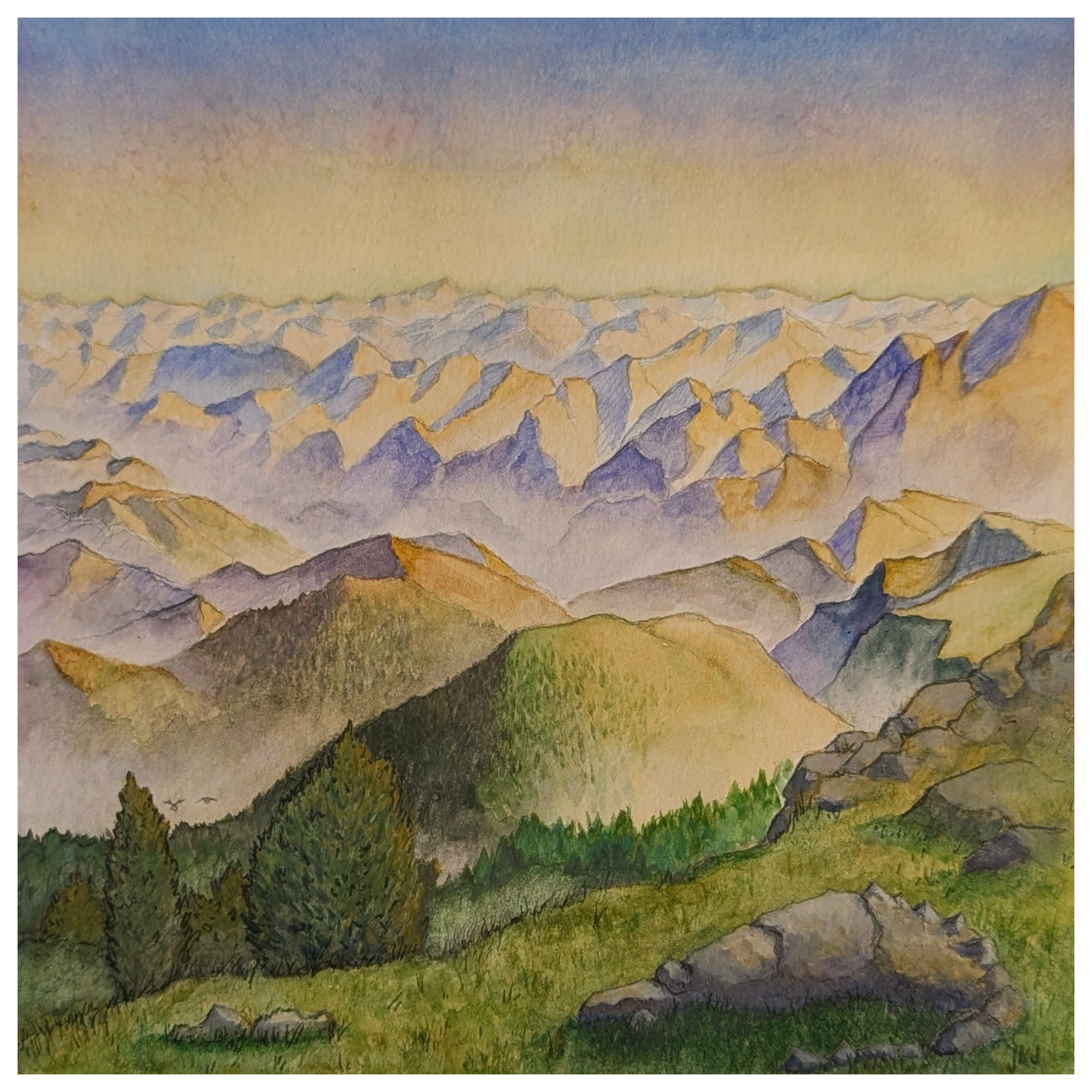
If the forests of Tir na Skiva were spoken of as living things, then the mountains were not spoken of as living at all. This distinction may appear common-sense to mortal readers, for after all, we know with certainty that our rocks and stone are not alive. But for the fae, we would be mistaken.
The fae attribute intention easily to rivers, forests, wind, memory, and even silence. But when speaking of Uhn Druimhán, the great mountain spine running through the heart of their realm, their language changes subtly. Reverence remains, certainly, but any affection is quietly replaced with awe, and something that might almost be mistaken for… concern?
One elder metalsinger explained it thus:
“The forests cared whether we flourished. The mountains did not.”
He did not mean this cruelly.
Indeed, I have come to suspect the fae considered this indifference a kind of virtue.
Among mortals, mountains are often imagined as symbols of conquest. We speak of summits, dominion, overcoming. Yet no fae I interviewed described Uhn Druimhán in triumphant terms. The range was never portrayed as majestic in the theatrical manner favored by painters and poets.
It simply endured.
Even the name reflects this. Though often translated in scholarly circles as The Spine of the World, the fae themselves appear to understand it less as a throne than a support: something ancient holding the land upright through sheer persistence.
Accounts describe the range as immensely old, weathered smooth over ages beyond mortal comprehension. No jagged alpine peaks, no glittering crowns of snow. The stone of Uhn Druimhán was rounded, layered, and deeply worn, as though time itself had passed over it like water.
One fae historian laughed openly when I showed him a popular engraving depicting the mountains as dramatic knife-edged spires.
“No,” he said, still smiling. “The mountains were older than ambition.”
I find this may be the single most succinct description of the region I have encountered.
Unlike the deep forests, where sound was muffled and absorbed, the mountains carried noise astonishing distances. Voices reportedly traveled across valleys with unnatural clarity, while wind became a near-constant companion. Not violent, nor dangerous, but persistent enough that many fae described silence there differently.
Not absence, but exposure? Yes, I believe exposure would carry the correct emotion.
One Root-Singer told me:
“In Fiodhkara, the forest listened with you. In Uhn Druimhán, you heard yourself too clearly.”
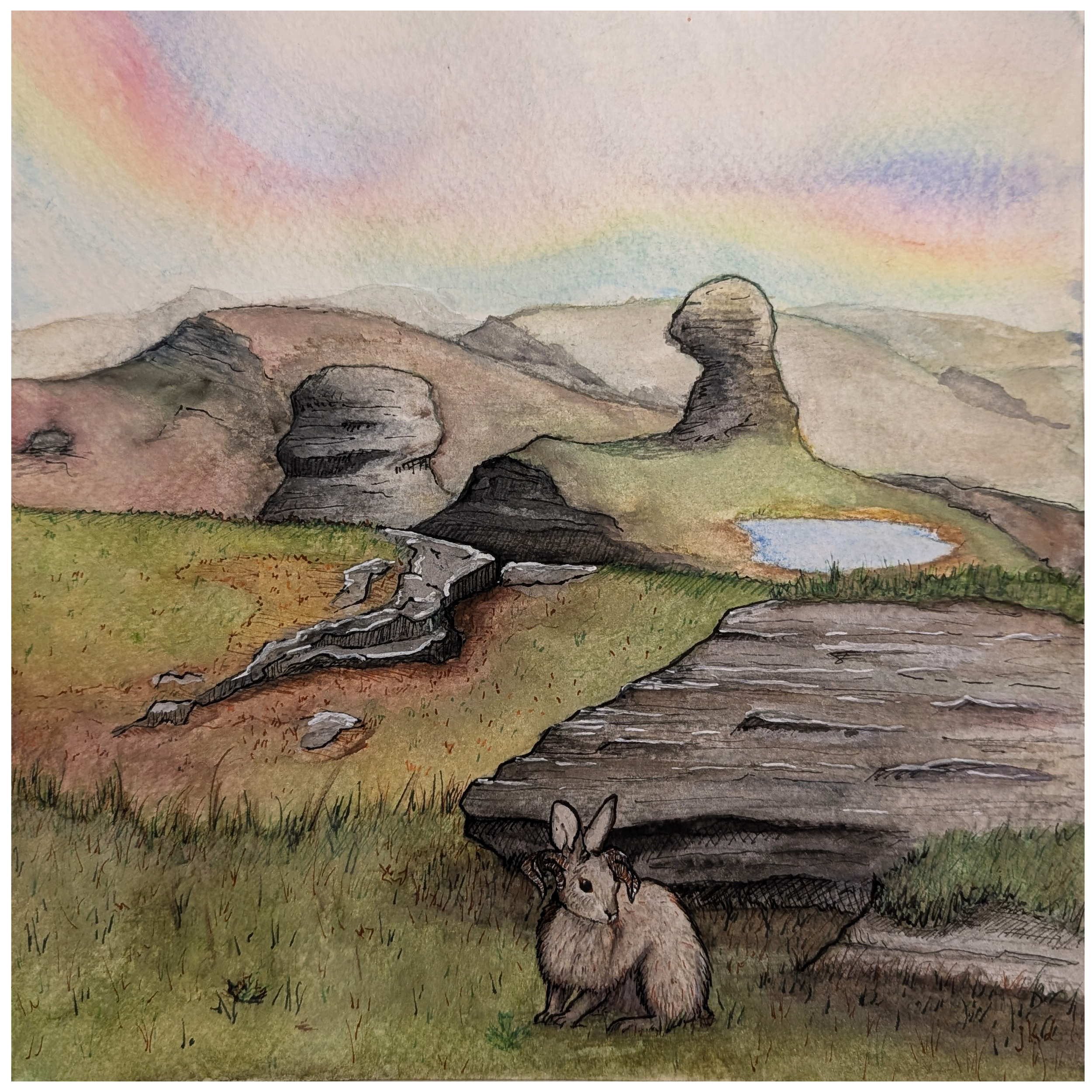
This perhaps explains why the uplands of Clárhán became associated with solitary rites and long vows. Clárhán is not a separate region precisely, but rather the exposed expression of The Spine itself: broad plateaus and open stone where soil had thinned enough for the bones of the world to show through.
I confess this region fascinates me more than any other I have thus far recorded… Perhaps because to me it feels the least fae.
There are few accounts of enchantment there. Little whimsy. Little warmth. Magic reportedly weakened beneath open sky, dispersing into wind before fully taking shape, and illusions and spells unraveled quickly.
A wandering artificer I once spoke to described Clárhán with visible discomfort:
“There was nowhere for magic to hide.”
And the fae themselves seem to have respected the region more than loved it.
Few lived there permanently, and those who journeyed into the uplands often did so alone, returning changed in ways difficult to articulate. Oaths sworn there were believed to be especially binding, perhaps because the mountains themselves neither witnessed nor cared for them.
A curious notion, indeed.
Several accounts describe stone markers scattered throughout the highlands: not monuments in the mortal sense, but quiet arrangements of balanced rock left behind by travelers whose names were never recorded.
The mountains themselves reportedly softened as they stretched southward. Peaks lowered. Ridges fragmented. Eventually the Spine disappeared entirely beneath the overwhelming growth of Fiáncorr, the untamed southern forest, and this detail unsettled me more than I expected: the idea that this forest was so powerful, so vast; that even mountains could be overtaken. That endurance itself might someday vanish beneath something younger, and hungrier.
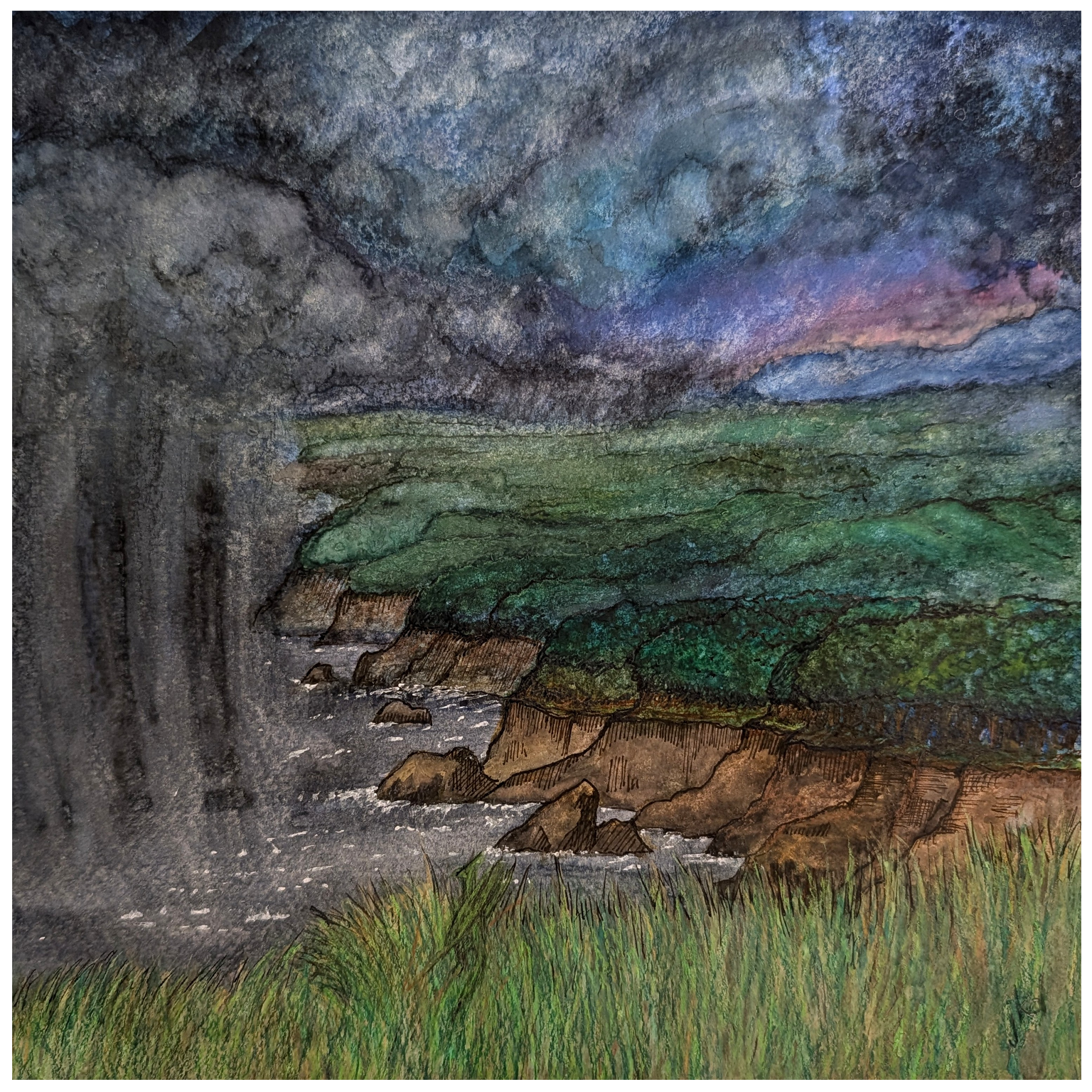
But perhaps the most haunting accounts belong not to the mountains proper, but to the northwestern coast where forest and stone meet the sea. Imeallfioh; The Edgewood. Or, more poetically in some translated records, The Standing Forest.
No region of Tir na Skiva is described with more visual clarity than this one, and even the most evasive fae became unexpectedly precise when speaking of those cliffs. The sea there struck directly against immense coastal stone with no beaches between. Forests ran uninterrupted to the edge itself: old wind-shaped trees gripping cliff faces with roots twisted deep into rock.
I once asked a Téarach metalsinger why the region appeared so vividly preserved in memory compared to others.
He considered this for some time before replying:
“Because nothing hid there. Not the sea. Not the wind. Not yourself.”
Unlike the inward hush of Tiraelun or the dim concealment of Scáihain, Imeallfioh appears to have possessed a startling openness. Light arrived unobstructed from the water. Wind carried salt and cold clarity through the trees. Illusions reportedly failed there with remarkable ease, unraveling harmlessly in the sea air.
One former court attendant described standing atop those cliffs during storms:
“The world felt honest there.”
I admit, I envy that sensation, perhaps more than I should. The region is strongly associated with wardens, watchers, and those who kept vigil rather than sought power. Interestingly, several separate accounts indicate this as one of the favourite places of the our revered Willow Queen, and that she would often been found upon those cliffs during the years preceding the Shattering. Always alone, always facing the sea, watching intently as storm rolled in off the coast.
One elderly servant of the Court recalled:
“Whenever Lord Eldwin vanished into the Hunt, she would go there instead. She would sit against the trees with the ocean before her and watch storms gather over the water.”
I asked what he thought she sought there and the servant smiled sadly.
“I think,” he said, “she wished to see something larger than her grief.”
I have found myself returning to that sentence often while compiling these records.
For all the beauty the fae describe in Tir na Skiva, there is always, beneath every memory, the faint and terrible understanding that none of it endured unchanged. Forests withdrew, mountains vanished beneath younger growth, and the sea watched everything… and kept nothing.
And yet the fae continue speaking of these places as though they remain only a journey away. Perhaps that is what truly separates them from us: mortals preserve what is gone, while the fae seem to linger beside it.
— Lucien Harow
Late Summer, 1871