

The Untamed South
Collected and Recorded by Lucien Harow, Fellow of the Royal Society of Antiquities
Throughout my research, I have come to realize that there is a peculiar tenderness in the way the fae speak of dangerous things. Mortals, when describing peril, are rarely generous. We sharpen our language around it, speak of cursed woods, treacherous ground, wicked seas, and haunted moors. We assign malice because malice is easier to understand than indifference; and far easier than innocence.
The fae do not speak this way of Fiáncorr.
They do not call it cruel, or wicked, or even, strictly speaking, call it wild. They call it young. This distinction was made to me with some force by a Root-Singer, who struck the table with her hands when I used the phrase “hostile growth.”
“No, Mr. Harow,” she said. “Hostility requires decision. Fiáncorr had made none.”
I have since revised my notes.
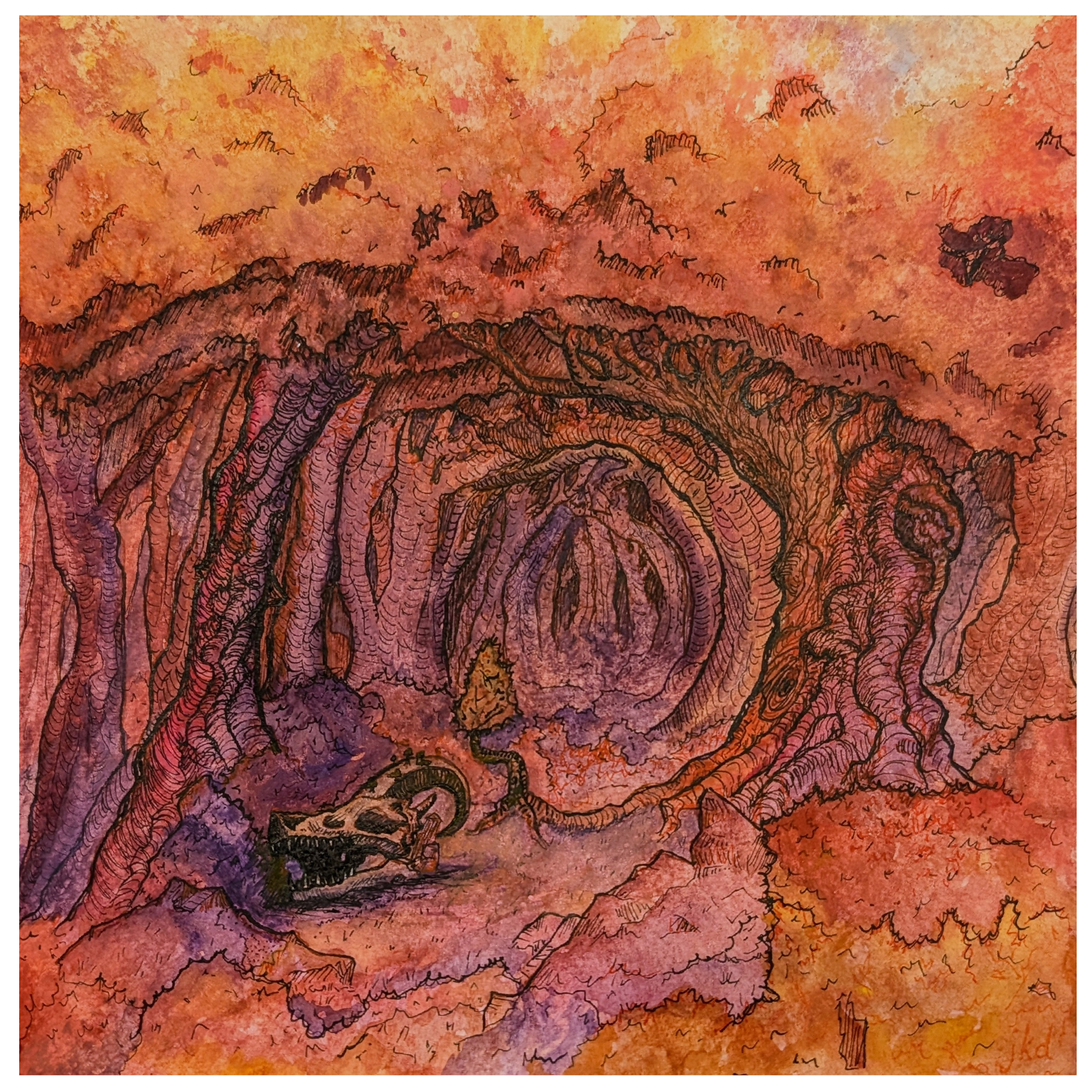
Fiáncorr lay in the southern interior of Tir na Skiva, where the ancient spine of Uhn Druimhán had already weakened and disappeared beneath soil. There, stone no longer held the land in memory, and the older forests no longer imposed their patient order. Growth surged forward with astonishing urgency, consuming rises, dips, buried rock, and anything else foolish enough to remain still. The foliage of this tangled land purportedly featured prominantly rich rusts, ochres, and umber tones… colours we mortals would normally associate with minerals, but found there growing from bough and limb. Greens too, did appear, but they were muted, olive, almost as lichen growing on the trees outside my study’s window, or so I’ve been told.
Unlike Fiodhkara, which remembered, Fiáncorr had not yet learned how. This, impressed upon me with utmost sincerity by that same Root-Singer, is perhaps the most important thing I needed to understand.
Many fae described entering the Young Wood as entering a thought before it had become language. Trees grew too closely together and at odd angles. Vines crossed and recrossed paths until no path remained trustworthy. Saplings crowded (slightly more) mature trunks. Brambles filled open space almost as quickly as travelers noticed.
One former hunter of the Willow Court described it with visible exhaustion:
“In Fiodhkara, the forest knew you were passing through. In Fiáncorr, the forest seemed surprised by you every moment.”
The Hunt itself rarely ventured far into the region. This surprised me, given the fae reverence for woodland travel, until several accounts clarified that Fiáncorr could not be followed in any meaningful sense. Tracks vanished not through concealment, but through overgrowth. Clearings collapsed. Landmarks changed faster than memory could settle upon them.
The danger, then, was not predation. It was fatigue, disorientation, and the slow erosion of expectation. A traveler might turn back after an hour and find the return path consumed by leafy abundance. Not erased out of malice… but merely occupied, by something else.
Among the fae, it is said:
“Fiáncorr does not turn you away. It simply does not bring you back.”
I find this one of the more chilling proverbs in my collection.
Magic behaved unpredictably there, almost as if the forest did not yet know it should answer to it. Spells reportedly overshot their purpose, repeated themselves imperfectly, or produced effects adjacent to, but not precisely aligned with, the caster’s intent. One artificer compared casting in Fiáncorr to “giving instructions to a child holding a thunderstorm.”
This description has the ring of exaggeration, though I have learned not to dismiss such things too quickly.
What fascinates me most is that, despite all this, no fae account treats Fiáncorr as a mistake. A nuisance, certainly. A as close to danger as could come in Tir na Skiva, unquestionably. But not a corruption, and certainly, not a mistake. Surprising to me was several fae even spoke of it with cautious affection, as one might speak of an unruly child too strong for its own limbs.
Perhaps all young things are terrifying to those who have survived too much, and I often reflect on that when I compile my notes on the young forest.
South and west beyond that restless forest, the land changed again. And with it, every voice softened.
Airéain: The Silver Sands; The Gentle Coast.
I have observed that many fae who speak fluently and even cheerfully of other regions grow almost evasive when describing Airéain. Not from fear, as with Móirin, nor reverence, as with Tiraelun. Rather, they seem reluctant to spend the memory too quickly.
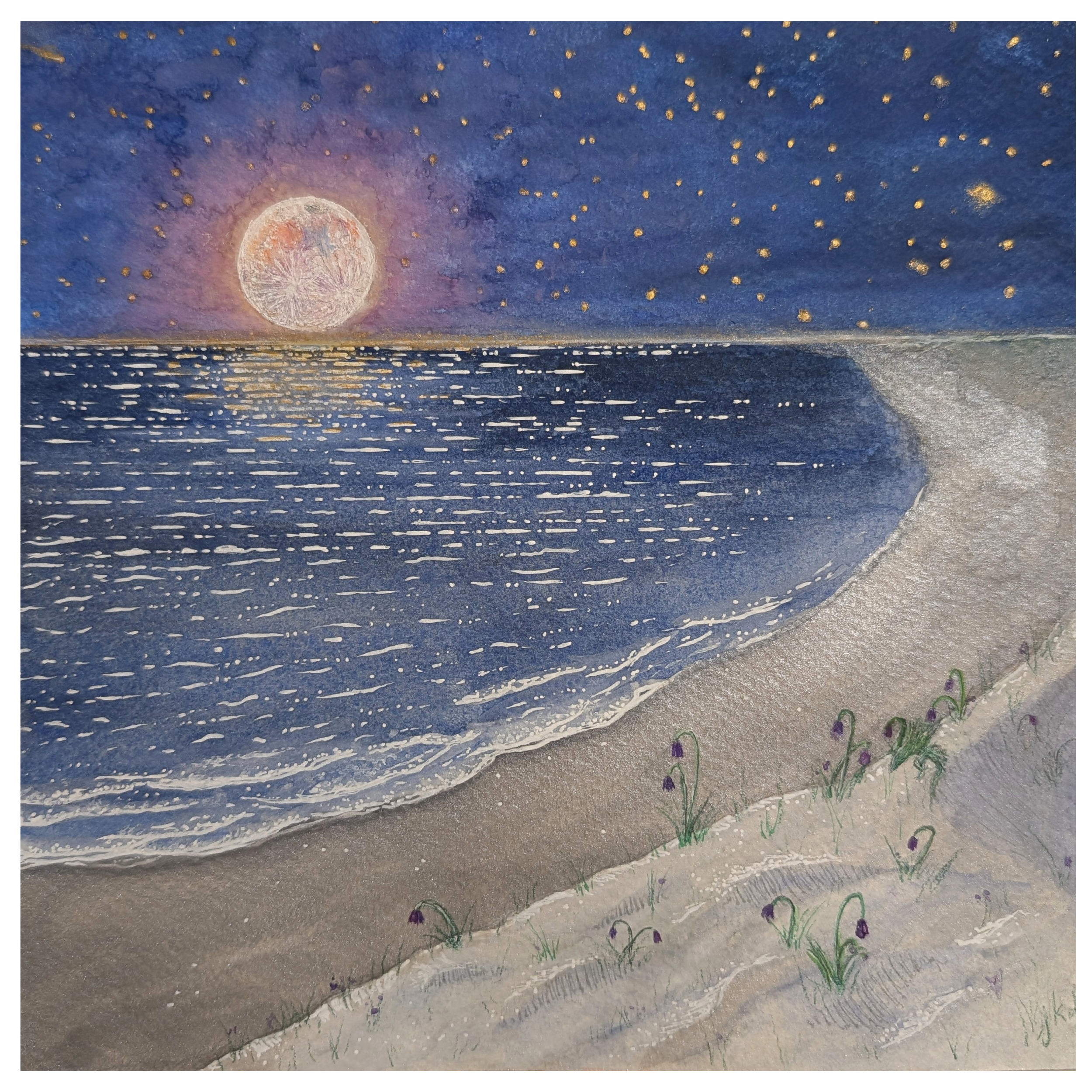
The region lay along the south-western coast of Tir na Skiva, where the land eased itself toward warm, quiet water. Pale sand with a natural silver sheen stretched in long gentle curves, and low dunes held steady beneath flowering grasses. Coastal groves grew near the shore, their leaves and branches taking on, according to several accounts, a soft luminous cast.
In stark contrast to Imeallfioh there were no cliffs or violent surf. Only warmth, and an almost-impersceptable sweetness on the air.
One fae seamstress, who had otherwise maintained admirable composure through three interviews, began weeping when she described the sound of the waves.
“You could loose yourself for days, weeks even, just sitting on that beach, watching the waves lap around your feet. When I was last there I felt no pangs of hunger, no restlessness, no cold… only stillness, deep in my heart. Sleep did not beckon me, and I thought I would have happily stayed there, feet in the sand, for the rest of my life. And yet, when my soul had it’s fill, I was ready to leave, and did not feel regret or wistful in that decision. ” She told me. “Can you imagine such a place?”
I could not answer her.
Airéain appears to have been one of the few regions of Tir na Skiva associated not with trial, memory, concealment, or endurance, but only with ease. Fae journeyed there after hardship. They gathered there following long travel, illness, grief, or difficult reconciliations. No permanent settlements were made upon its shores, but many gatherings reportedly lasted longer than intended.
This, I am told, was considered both common and forgivable.
The magic of Airéain was gentle by all accounts. Healing spells settled more naturally there. Quarrels softened. Weariness loosened its grip, and even powerful magic seemed to quiet itself; not diminished, but returned to balance.
A common refrain I heard, almost word for word:
“Nothing is asked of you in Airéain… and so, much is given.”
I find that sentence unbearably beautiful.
It is tempting, as a romantic and admitted fool, to imagine Airéain as the paradise of Tir na Skiva. The last moonlit shoreline. The gentle ending. The place where even grief laid itself down in the sand and slept.
But the fae resist this interpretation. Airéain was not an ending, they insist, it was a release. There is a difference.
Perhaps that is why I have chosen to conclude this brief survey of Tir na Skiva here, upon the southern coast, rather than in the deeper forests or among the mountains. Airéain offers something none of the other regions quite allow:
Permission; to rest, to arrive, to leave, to carry what one must, and set down what one can.
As the Winter Solstice approaches and the conversations I hear grow sharper in parlours, council rooms, and market squares, I find myself thinking often of that lost southern shore, and of the fae who remember it. Of those who wish to return to a realm that may no longer be capable of receiving them, and of those who know, perhaps more clearly than they admit, that some homelands survive only by changing beyond recognition.
The fae have given our world many marvels since the Shattering. But I wonder whether the thing they brought most unwillingly was this: the knowledge that beauty does not make a thing permanent, and loss does not make it less real.
— Lucien Harow
Wintertide, 1871