

The Willow Queen
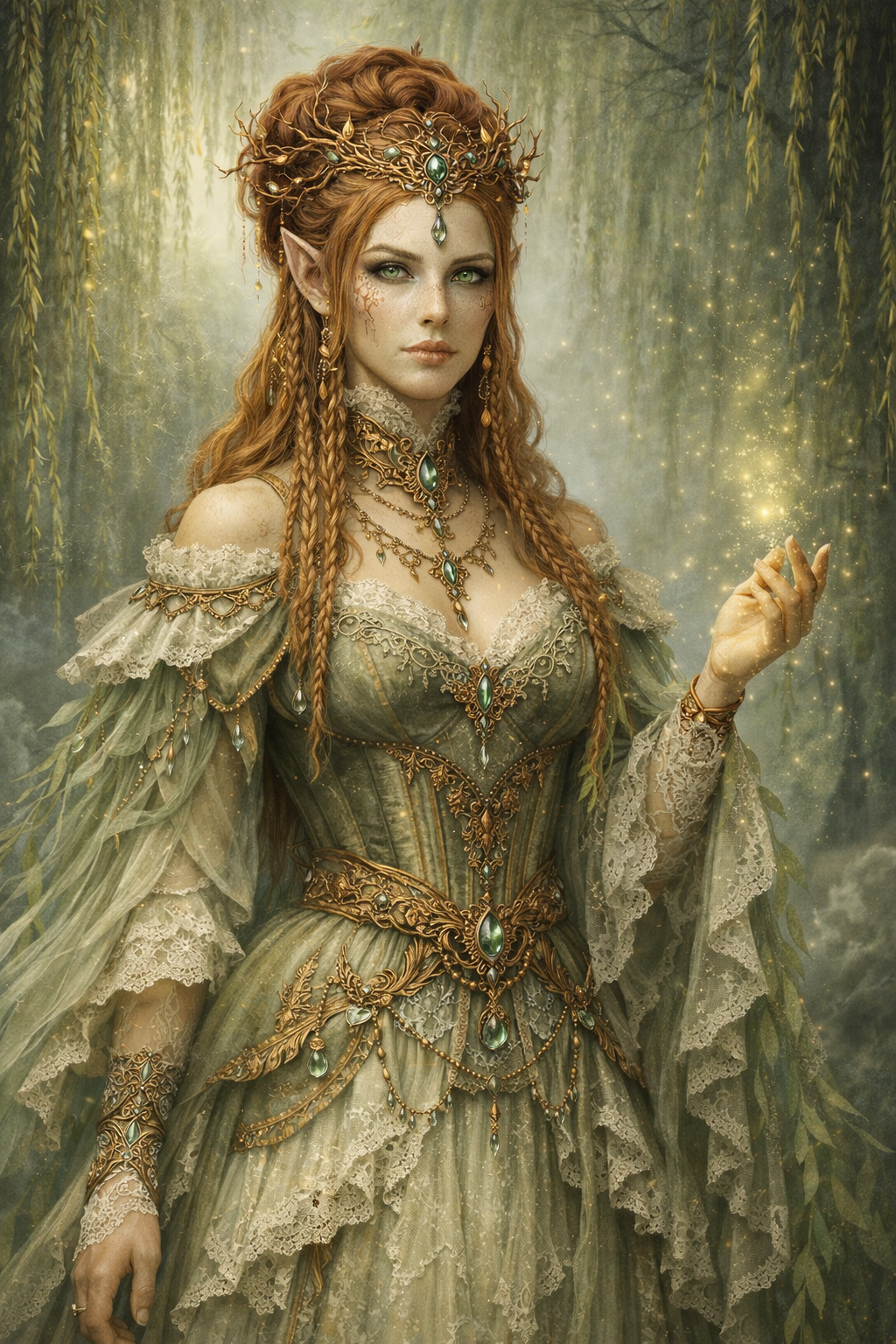
Long before the age of steam, before mortal cities rose from steel and stone… the mortal and fae realms were divided by an ancient boundary known as the Veil. Both worlds existed side-by-side yet separate, touching only in places where magic grew thin. The fae, with their innate magic, could easily slip through the Veil’s softened places and walk beneath mortal skies; giving rise to stories whispered by firelight, to tales of fair folk, tricksters, and enchantment.
But in the fae realm, a quiet darkness had begun to spread.
No war marked its coming, no plague announced the danger. Instead, the eldest fae simply began to fade: slipping away one by one into nothingness, their light diminishing like embers dying in a hearth. None who remained fully understood the cause and fear festered; confusion grew. And with it, the younger fae – unprepared for such loss – found themselves orphaned by an age.
Among them was a young fae: gifted, emotional, and not yet wise enough to know the depths of her own power. Every vanished elder struck her like lightning through the heart, and every silence left behind by the Diminishing echoed inside her until she feared there would soon be nothing left within her but storm.
Some pitied her intensity, others feared it. But one among them did neither.
The One Who Stood Through the Storm
There was already great respect surrounding Elgwin in those years. Though young by the standards of the eldest fae, he carried himself with the composure of someone far older: calm where others unraveled, steadfast where others panicked. In an age consumed by fear, he became a quiet certainty for many. And for her, most of all.
Elgwin saw the storm gathering beneath her skin long before anyone else understood the danger of it, and where others saw volatility, he saw sorrow. Where others saw power barely restrained, he saw someone desperately trying not to drown beneath grief.
And though that understanding frightened her, she found herself drawn to him nonetheless. At first, she mistook his presence for duty. He stood beside her during disputes among frightened fae, walked beside her through silver forests grown heavy with mourning, and remained near during the long quiet hours when sleep would not come. He never pressed, never demanded, never sought to soothe her with empty reassurances.
He simply stayed.
And slowly, against all reason, she began to lean toward him the way weary branches lean toward sunlight.
He became the first place she had ever truly rested, and it was with him that she remembers the first time she laughed during those darkening years; how startled she felt by the sound of it, and how softly he smiled in response… as though he understood the miracle of it without needing it explained.
Their love did not arrive all at once. It grew quietly between moments of sorrow and survival: a slow-burning devotion shaped by trust rather than passion alone. She loved him first for his steadiness, then for his gentleness, and finally for the terrible comfort of realizing she could unravel before him completely and he would not leave.
And Elgwin loved her with the same unwavering patience he carried into all things. He courted her tenderly, steadfastly, never asking her to become less fierce, less emotional, or less herself. He did not try to calm the storm within her; he simply became the place it could rest.
In time, they wed. And though she did not yet wear a crown – and neither could imagine how catastrophically their world was about to change – she knew already that he had become the truest sanctuary she would ever know.
The Shattering
But sorrow is a dangerous kind of magic, and grief unrestrained is a storm unto itself. As the Diminishing deepened, so too did the pressure building within her heart. She carried the suffering of her people like a wound that would not close until one night, beneath the crushing weight of despair, she lost control.
Her power surged. Reality buckled. And The Veil – ancient, sacred, eternal – was torn asunder. Then the storm passed, and dawn broke. And she understood, in a single devastating breath, what she had done: she had fused the destinies of mortals and fae forever more.
The two realms were now intertwined, their magic and futures bound irrevocably. And it was her doing: her sorrow, her storm, her breaking.
Shame nearly destroyed her.
When the storm finally collapsed and the broken forest fell silent, Elgwin was there.
He found her beneath the ruined boughs trembling beneath the enormity of what she had done, and though terror and devastation churned all around them, he offered neither blame nor judgement. He simply gathered her into his arms and held her while she wept.
And from that sunrise onward, he never again left her side.
The remaining fae, frightened and leaderless, turned to the one who still stood amidst the ruins of their fading world. Though grief weighed heavily upon her, she gathered her people, offered guidance, and sought the protection of mortal rulers. Eldwin remained beside her through it all: intercepting conflicts before they reached her, bearing burdens she could not carry alone, and quietly steadying the storm that still lingered within her heart.
Over decades – then centuries – together they helped mend what had been broken, forging alliances, weaving trust, and building a fragile peace between worlds. In time, she earned a crown.
She became The Willow Queen: The Queen who bends rather than breaks, The Queen whose storm never again escapes her control, The Queen who carries her guilt like a shadow beneath her serene smile.
And beside her stood Lord Elgwin; her Consort, her steadfast shadow, the calm beneath her chaos, and the only soul who had ever witnessed both the storm that broke the world and the woman buried beneath it.
The Age of Cooperation
As mortal innovation rose, so too did fae magic weave itself through human progress. With their enchantments steam engines burned brighter and cleaner, medicine healed beyond natural limits, great wards protected cities and borders, and industry thrived with newfound force and wonder. For a time, the future looked bright. The diminishing of the fae appeared to have stopped altogether, and the two realms prospered together. The Queen even dared to hope.
The Present Day: An Unraveling Peace
But harmony is fragile.
As the industrial age takes hold, fear and resentment grow on both sides. Mortals fear the fae’s ancient powers, which they cannot wield, fae fear mortals’ ambition and disregard for magic, and whispers of betrayal echo in both realms.
Some fae speak openly of leaving the mortal world behind, returning to what remains of their realm; even though the Queen knows the truth: to return would mean death.
Their magic can no longer survive apart from the mortal world, as the realms were fused by her hand and only coexistence can sustain the fae. Thus the Willow Queen calls for one final act of diplomacy: A grand ball where mortals and fae gather beneath lantern light, music, and revelry. A night suspended between hope and catastrophe. A place where every gesture, every conversation, every dance may shift the fate of worlds. And the Queen, who broke The Veil, who bends beneath the weight of her secret, who has never allowed herself to unleash the storm within, must stand at the heart of it all.
Her serene grace is her armor. Her copper shackles her quiet vow. Her storm-swept heart her burden. For she alone knows how high the cost of failure truly is.